Compliance / 03
LEV examination and test.
Welding fume is a carcinogen. Your extraction is what keeps it out of your welders' lungs, and the law says it must be thoroughly examined and tested at least every 14 months.
- Regulation
- COSHH Reg. 9, HSG258
- Interval
- At least every 14 months
- You get
- Statutory TExT report
- Engineers
- BOHS P601 trained
Why it matters
Extraction that isn't tested isn't protection.
Since 2019 the HSE has treated all welding fume, including mild steel fume, as a human carcinogen. That means effective engineering control, usually local exhaust ventilation, for any welding indoors.
Extraction that looks fine can be pulling a fraction of its design airflow: blocked filters, split ducting, a fan running backwards, hoods positioned where they can't capture anything.
COSHH Regulation 9 requires a thorough examination and test at least every 14 months, with records kept for five years. It's one of the first things an HSE inspector asks for in a fabrication shop.
What we check
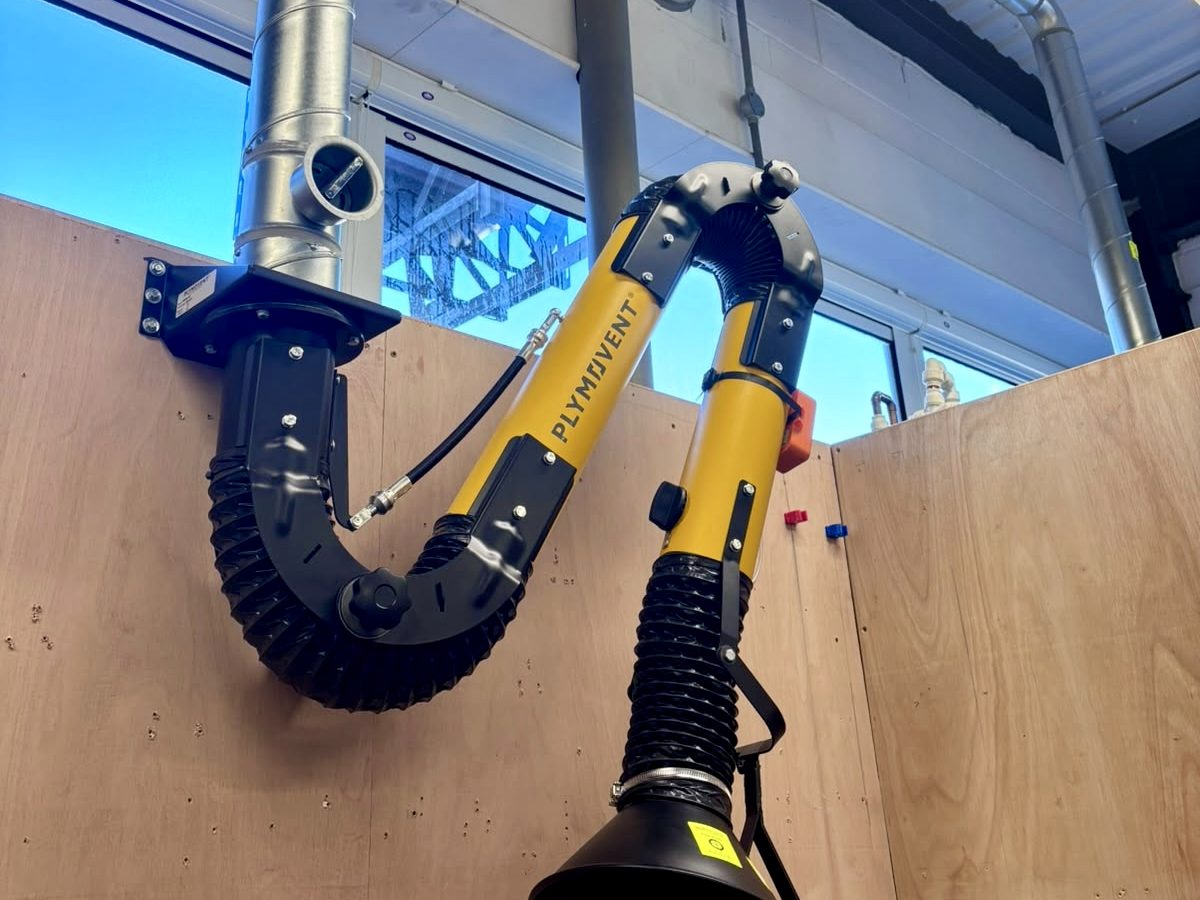
A full TExT to HSG258.
- Visual inspection of hoods, arms, ducting, fans, filters and discharge
- Capture and face velocity measured at every hood and extraction point
- Static pressure and airflow in ducting against design or commissioning data
- Filter condition and differential pressure
- Fan performance and direction of rotation
- Qualitative checks such as smoke testing to show capture in practice
- Fixed systems, mobile units, extraction arms, downdraft benches and on-torch extraction
What you get
Paperwork that stands up.
- Statutory thorough examination and test report, as HSG258 sets out
- Pass label on each hood or unit with the next due date
- Clear actions for anything underperforming, with a quote
- Report and history held in OneArc, and kept for the five years COSHH requires
How it works
Booked, tested, certified, remembered.
Book
Call, email or use the form. We agree a date that suits production and confirm what's on site.
Test
Our engineers test on site, or in our Grimsby workshop if you'd rather send kit in.
Certify
Certificate and sticker per asset. Anything that fails comes with the reason and a repair quote.
Remind
Everything goes into OneArc. We remind you before it's due again.
Questions
Common questions
Anything else, call the workshop on 01472 469223.
Who's competent to do this test? Qualifications and competence
Read the guide: LEV testing for welding fume: what the law expects
How often does LEV need testing?
At least every 14 months under COSHH Regulation 9. Some processes listed in COSHH Schedule 4 need more frequent examination. We'll confirm the right interval for your site.
Do mobile fume extractors need testing?
Yes. Any LEV, fixed or mobile, used to control exposure to a hazardous substance needs a thorough examination and test.
Who can carry out an LEV test?
A competent person. Our engineers hold the BOHS P601 qualification for thorough examination and testing of LEV systems.
What if there's no commissioning data?
Common on older systems. We take baseline measurements and record them, so future tests have something to compare against.
Book it with
The rest of the visit.
Bundle tests into one visit and the shop floor stops once. Two or more services together also brings the price down.
While we're there
Need wire, tips or discs? We'll bring it.
We supply the consumables as well as test the kit. Add them to the order and they come with the engineer, matched to the machines we've just tested.
Free site audit
Would your workshop pass an HSE inspection today?
Most firms find out when they fail one. We'll walk your site for free and tell you what's due, what's overdue and what's missing. No obligation, no hard sell.